Monday, 31 January 2011

Sunday, 30 January 2011


Monday, 24 January 2011
Shot list
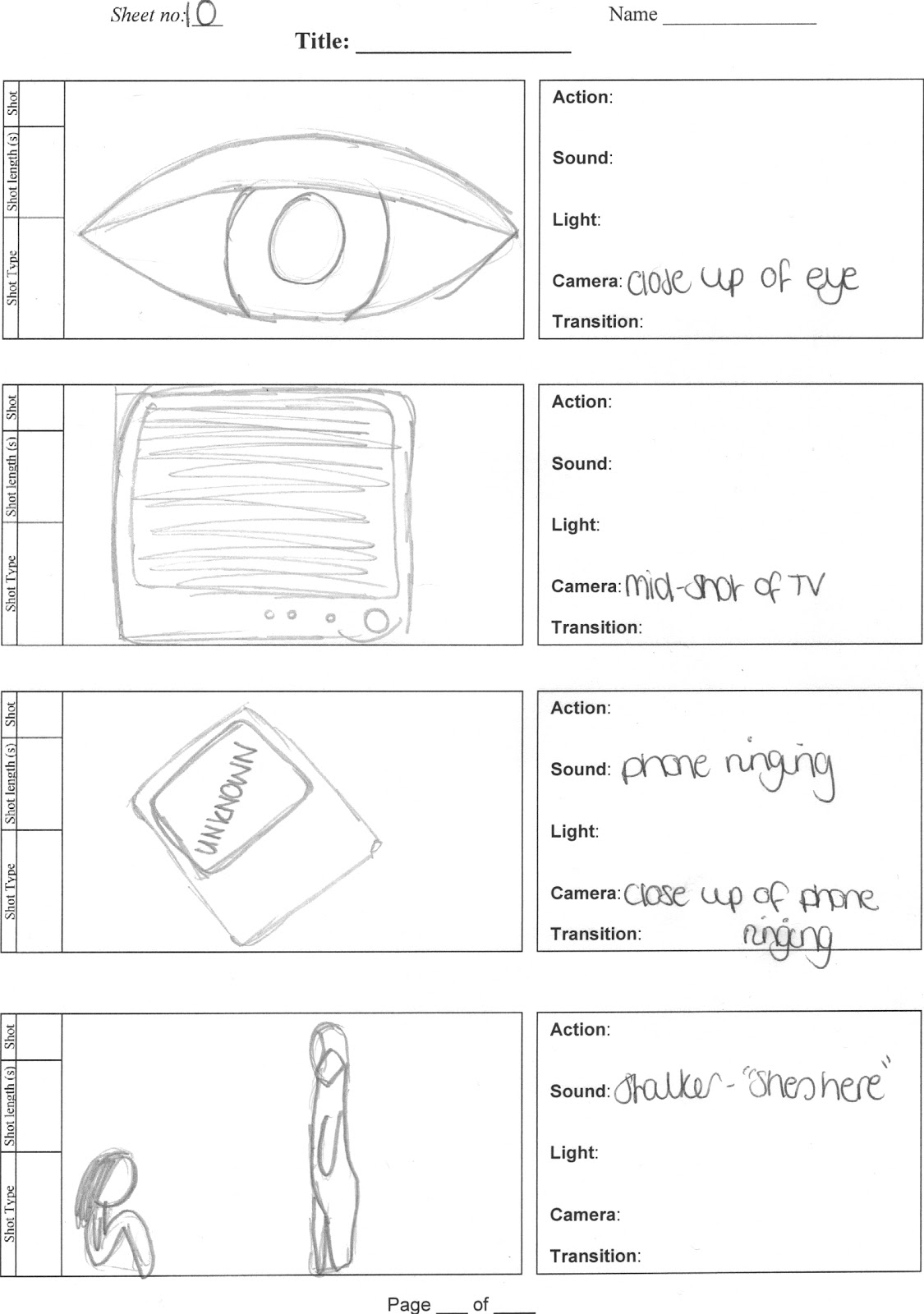
These are some of the shots we plan to use in our thriller ...
Shot List
- Extreme close up of stalker's eye
- Over the shoulder shot of stalker looking at computer
- Panning shot of room
- Tracking shot when stalkers following girl
- Close up from stalkers view of girl
- Mid shot of television
- Extreme long shot of girl walking down street
- Tracking shot of girl walking towards shed
- Close up of lock
- Close up of cage
- Long shot of girl in garden holding rabbit
- Close up of face when hears a noise
- High angle shot when stalker has girl captured
Sunday, 23 January 2011
The Codes and Convections of the Thriller Genre in 'Leon'
Luc Besson's 'Leon' has many of the codes and conventions of the thriller genre to build tension and to create suspense.
 Throughout 'Leon' there is a use of extreme, the opening shot in 'Leon' is a wide landscape shot of the city which then changes to a tracking shot following the car. It leads the camera into a small shop where we see a close up of Leon's eye. The change from a wide landscape shot to an extreme close up disorientates the audience and excites them. We are introduced to mafioso, Tony and the professional hit man, Leon through extreme close ups. This makes the audience unaware of who they are and creates suspense. One of the men is a typical thriller character, smoking and hiring a hit man to kill someone who is involved with drugs, where as Leon himself is unlike the typical thriller character. We see this in the second scene when he saves the femme fatale from having the same fate as the rest of her family and giving her a place to stay.
 Another code and convention of the thriller genre in 'Leon' the disorientates the audience is the use of the spiral staircase. This is at the part where Leon has to kill the fat man and all of the other men protecting him because of the drugs. This makes the audience confused as to where Leon is, it makes it seem that he can be anywhere and on any level. In the scene where the fat man gets killed there is alot of high angle shots which represent the fat man as Leon's prey and shows him as vunerable.

Another code and convention of the thriller genre that is in 'Leon' is the use of the femme fatale. Unlike other thrillers the femme fatale in 'Leon' is just a 13 year old girl. However, although she is so young she is an ambiguous character. She has a seductive look and the bruises show how vunerable she is. When the audience first meets the audience she is wearing boots, leggings, a see through jumper and a choker and she is smoking. This gives the impression that she is a sexually attractive character even though she is only 13. This creates a contrast between the typical view of a young child and the girl in 'Leon'.
 Throughout 'Leon' there is a use of extreme, the opening shot in 'Leon' is a wide landscape shot of the city which then changes to a tracking shot following the car. It leads the camera into a small shop where we see a close up of Leon's eye. The change from a wide landscape shot to an extreme close up disorientates the audience and excites them. We are introduced to mafioso, Tony and the professional hit man, Leon through extreme close ups. This makes the audience unaware of who they are and creates suspense. One of the men is a typical thriller character, smoking and hiring a hit man to kill someone who is involved with drugs, where as Leon himself is unlike the typical thriller character. We see this in the second scene when he saves the femme fatale from having the same fate as the rest of her family and giving her a place to stay.

Another code and convention of the thriller genre that is in 'Leon' is the use of the femme fatale. Unlike other thrillers the femme fatale in 'Leon' is just a 13 year old girl. However, although she is so young she is an ambiguous character. She has a seductive look and the bruises show how vunerable she is. When the audience first meets the audience she is wearing boots, leggings, a see through jumper and a choker and she is smoking. This gives the impression that she is a sexually attractive character even though she is only 13. This creates a contrast between the typical view of a young child and the girl in 'Leon'.


Monday, 27 December 2010
Preliminary task questions
What planning did you do? How was this useful, and how did you change from your plans?
To plan for the preliminary task we first did a recce. This is when there is a pre visit to the location which we chose to shoot in. This was useful because we could decide on the location, making sure that it is appropriate for filming. We did a floor plan This meant we knew exactly where the actors were walking and it allowed us to decide whether we had enough room to film. We also did a rehearsal to double check this. We then drew a story board which allowed us to film quicker because we knew the order of shots and what shot type we needed for the particular scene. This made it easier when we were filming because we all knew what we doing. The rehearsal allowed us to make sure we knew exactly what we were saying and could practise. It meant that we didn't waste time whilst filming the final shots, it also allowed us to know where we were walking. After the rehearsal we changed the route we were going to take in the canteen because the tables and chairs made it awkward to get to the location the actors were going to sit at for the conversation.
What camera skills have you developed? How confident are you with using the cameras, and has this confidence changed during the project? Give details of specific camera skills/ techniques you have developed/ improved, and include areas where you lack confidence/ need to improve?
Through filming the preliminary task I have developed many new skills. I now know the basics of filming and how to use a camera, during the task I became more confident with using a camera. Although I didn't film any of the task because I was in it, I still used the camera before we filmed for the final scene. I think I could become even more confident if I had more experience using the camera to film. I now know techniques such as the 180 degree rule, through the preliminary task I know that when shooting a conversation the 180 degree rule happens so that the audience knows what character is speaking and when. Whilst filming we used tripods and dollies, before the preliminary task I didn't know what a dollie was, and I had never used a tripod before. I know what they are now and can set up the equipment safely so that filming was quick.
What editing skills have you developed? How confident are you with using the editing program? Give details of specific editing skills/ techniques you have developed/ improved, and include areas where you lack confidence/ need to improve?
Before the preliminary task I didn't know how to edit or how to use the editing program. I am now confident at most things on the editing programme. With a little more experiance I think I could gain more confidence with the editing program and be able to use it on my own to edit my thriller once I have filmed it.
To plan for the preliminary task we first did a recce. This is when there is a pre visit to the location which we chose to shoot in. This was useful because we could decide on the location, making sure that it is appropriate for filming. We did a floor plan This meant we knew exactly where the actors were walking and it allowed us to decide whether we had enough room to film. We also did a rehearsal to double check this. We then drew a story board which allowed us to film quicker because we knew the order of shots and what shot type we needed for the particular scene. This made it easier when we were filming because we all knew what we doing. The rehearsal allowed us to make sure we knew exactly what we were saying and could practise. It meant that we didn't waste time whilst filming the final shots, it also allowed us to know where we were walking. After the rehearsal we changed the route we were going to take in the canteen because the tables and chairs made it awkward to get to the location the actors were going to sit at for the conversation.
What camera skills have you developed? How confident are you with using the cameras, and has this confidence changed during the project? Give details of specific camera skills/ techniques you have developed/ improved, and include areas where you lack confidence/ need to improve?
Through filming the preliminary task I have developed many new skills. I now know the basics of filming and how to use a camera, during the task I became more confident with using a camera. Although I didn't film any of the task because I was in it, I still used the camera before we filmed for the final scene. I think I could become even more confident if I had more experience using the camera to film. I now know techniques such as the 180 degree rule, through the preliminary task I know that when shooting a conversation the 180 degree rule happens so that the audience knows what character is speaking and when. Whilst filming we used tripods and dollies, before the preliminary task I didn't know what a dollie was, and I had never used a tripod before. I know what they are now and can set up the equipment safely so that filming was quick.
What editing skills have you developed? How confident are you with using the editing program? Give details of specific editing skills/ techniques you have developed/ improved, and include areas where you lack confidence/ need to improve?
Before the preliminary task I didn't know how to edit or how to use the editing program. I am now confident at most things on the editing programme. With a little more experiance I think I could gain more confidence with the editing program and be able to use it on my own to edit my thriller once I have filmed it.
Sunday, 26 December 2010
Monday, 29 November 2010

Subscribe to:
Posts (Atom)